
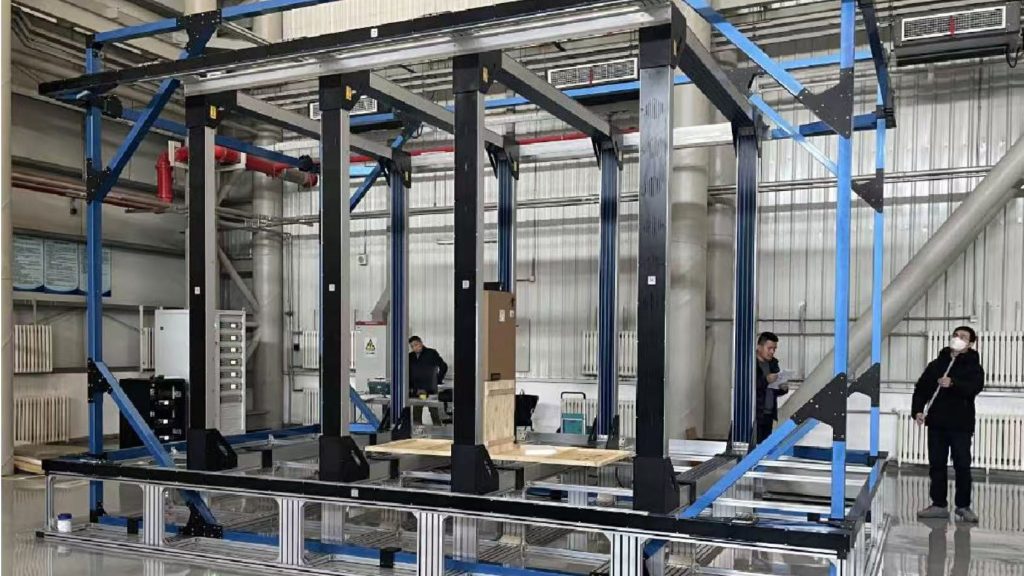
Many laboratories invest heavily in precision magnetic systems.
Yet the biggest source of error often comes from something far less obvious:
👉 The environment itself
Hidden steel, reinforced concrete, and even moving objects can distort magnetic fields—often without being noticed.
This article explains how to perform a practical magnetic site survey, identify hidden interference sources, and improve laboratory layout before problems occur.
1. Why Site Survey Matters More Than Equipment Specs
You can have:
- a perfectly calibrated magnet
- a stable power supply
- a high-precision sensor
And still get inconsistent data.
Why?
👉 Because magnetic fields are influenced by surrounding materials.
According to Wikipedia, ferromagnetic materials can significantly distort external magnetic fields even without active magnetization.
2. Common Hidden Magnetic Interference Sources
Structural Sources
- steel reinforcement (rebar) in concrete
- building frames
- steel tables and cabinets
Equipment Sources
- vacuum chambers
- optical tables
- nearby instruments
Dynamic Sources (Often Overlooked)
- elevators
- moving vehicles
- doors and cabinets
- people carrying metal objects
👉 These create time-varying disturbances, which are much harder to diagnose.
3. Step-by-Step Magnetic Site Survey Procedure
You don’t need a full geophysics lab to do this.
Step 1: Baseline Measurement
- Use a Gaussmeter or fluxgate sensor
- Record background magnetic field
Step 2: Spatial Mapping
- Measure field at multiple positions
- Create a simple grid map
Step 3: Height Variation Check
- Measure at different heights
- Detect floor or structural influence
Step 4: Temporal Monitoring
- Record field over time
- Identify fluctuations
Step 5: Movement Test
- Observe field while:
- doors open/close
- people move nearby
- equipment operates
👉 This step reveals the “invisible troublemakers”
4. Recognizing Typical Problems
Localized Field Distortion
- Caused by nearby steel structures
- Appears as spatial inconsistency
Drift Over Time
- Environmental changes
- temperature or mechanical shifts
Periodic Noise
- elevators
- AC systems
- traffic
Random Spikes
- human activity
- moving objects
5. Why Rebar Is a Silent Problem
Reinforced concrete is everywhere.
The issue:
- rebar is unevenly distributed
- magnetization varies
- effects are not symmetric
👉 This leads to unpredictable field distortion.
6. Practical Mitigation Strategies
Relocation
- Move system away from interference sources
- Even 1–2 meters can help significantly
Height Adjustment
- Raising system reduces floor influence
Non-Magnetic Infrastructure
- Replace steel fixtures with aluminum or composite
Shielding (When Necessary)
- Mu-metal or passive shielding
- Costly but effective
Active Compensation
- Use compensation coils
- Cancel background fields dynamically
According to IEEE, active compensation is increasingly used in precision magnetic environments.
7. When You Need a More Advanced Approach
For high-precision applications:
- magnetically shielded rooms
- active field cancellation systems
- multi-axis compensation
But for many labs:
👉 a good site survey solves most problems before they escalate
8. Designing Your Lab Layout Around Magnetic Reality
Instead of forcing the environment to behave:
👉 Design your system with the environment in mind
Consider:
- equipment placement
- traffic patterns
- structural materials
- future expansion
9. How Cryomagtech Supports Site Survey and Compensation
Cryomagtech provides magnetic field systems and compensation solutions, including:
- three-axis magnetic field systems
- gradient and compensation coils
- guidance for site evaluation
- integration support for lab environments
👉 Product link placeholder: Cryomagtech Magnetic Compensation & Field Systems
We help identify and mitigate environmental interference—before it affects your results.
References
- Wikipedia – Magnetic properties of materials
https://en.wikipedia.org/wiki/Ferromagnetism - IEEE – Magnetic interference and compensation methods
https://ieeexplore.ieee.org/
Key Takeaways
- Environmental interference often dominates measurement errors
- Hidden steel and rebar can distort magnetic fields
- Moving objects introduce time-varying disturbances
- Simple site surveys can identify major issues
- Relocation and layout adjustments are often effective
- Compensation systems provide advanced solutions