

In many laboratories, magnetic experiments begin with simple coil setups. A pair of Helmholtz coils or a small electromagnet can generate stable magnetic fields suitable for student experiments, sensor testing, or basic material characterization.
However, as research projects expand and experimental requirements become more demanding, laboratories often discover that the original coil system no longer meets their needs.
Understanding when and why a simple coil system stops being sufficient can help research teams plan upgrades more effectively.
1. The Early Stage: Simple Coil Systems for Basic Experiments
In early-stage research or teaching laboratories, coil systems are often chosen for simplicity.
Typical features include:
- Modest magnetic field strength
- Manual current control
- Limited automation
- Small experimental volume
Helmholtz coils are commonly used in these environments because they generate a highly uniform magnetic field in a defined central region.
Reference overview:
https://en.wikipedia.org/wiki/Helmholtz_coil
These systems work well for:
- Sensor calibration experiments
- Basic Hall effect measurements
- Demonstrations of magnetic field principles
At this stage, simplicity is often an advantage.
2. When Experiments Become More Demanding
As research projects mature, several new requirements typically appear.
Higher Magnetic Field Strength
Experiments involving magnetic materials or spintronic devices may require fields significantly larger than those produced by small laboratory coils.
Larger Sample Volume
Research setups often grow to include:
- Cryogenic systems
- Optical access
- Complex sample holders
This requires larger magnet gaps or larger uniform field regions.
3. Stability and Repeatability Requirements Increase
Student experiments may tolerate moderate field drift.
However, advanced research often demands:
- Long-duration field stability
- High repeatability between runs
- Low-noise current control
Magnetic field stability depends directly on current stability and system thermal behavior.
Even small fluctuations can influence measurements such as:
- Magnetoresistance
- Hall voltage
- Magnetic hysteresis loops
For background on magnetic measurement principles:
https://en.wikipedia.org/wiki/Magnetic_field
As experimental sensitivity increases, system stability becomes a limiting factor.
4. Automation and Experimental Throughput
Modern research laboratories increasingly rely on automated experiment platforms.
Automation often requires:
- Programmable magnetic field sweeps
- Integration with Python or LabVIEW scripts
- Long unattended measurement runs
Manual power supplies or simple coil systems may not provide:
- precise ramp control
- reliable communication interfaces
- reproducible sweep timing
Automation capability therefore becomes an important factor when scaling up experiments.
5. Thermal and Power Limitations
Small coil systems often operate near their thermal limits.
When experiments require:
- continuous operation
- large field sweeps
- higher currents
heat generation becomes significant.
Resistive heating follows the relation:
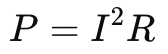
As current increases, thermal load grows rapidly.
Without adequate cooling or system design, temperature rise may lead to:
- drift in magnetic field strength
- changes in coil resistance
- reduced system reliability
6. Stray Field and Laboratory Infrastructure
As magnet systems grow larger and stronger, stray magnetic fields also increase.
This can affect nearby laboratory instruments such as:
- electron microscopes
- precision balances
- sensitive sensors
Proper magnet system design and laboratory layout planning become increasingly important.
Scaling up experiments therefore requires thinking beyond the magnet itself.
7. Transitioning to Research-Grade Magnet Systems
When simple coil systems reach their limits, laboratories often transition to more advanced magnetic platforms.
These systems typically include:
- optimized electromagnet geometry
- stable excitation power supplies
- improved cooling and thermal design
- automation-ready control interfaces
Cryomagtech supports laboratories transitioning from basic experimental setups to more advanced magnetic field platforms designed for stability, scalability, and automation.
Planning this transition carefully helps laboratories maintain experimental continuity while expanding research capability.
Key Takeaways
- Simple coil systems are effective for early-stage experiments
- Advanced research often requires higher field strength and stability
- Automation and integration become essential as experiments scale
- Thermal management and power capability limit small coil systems
- Upgrading magnet platforms supports growing research demands
Scaling up experiments is a natural part of scientific progress.
The key is recognizing when the original setup has reached its practical limits.