

Purchasing a laboratory magnet system—whether an electromagnet, Helmholtz coil, or superconducting magnet setup—is often more complex than expected.
Many procurement decisions focus on headline specifications such as maximum field strength or current rating. However, experienced laboratories know that these parameters alone rarely determine whether the system will actually work for their experiment.
This article highlights common procurement mistakes researchers make when buying lab magnet systems and how to avoid them.
1. Focusing Only on Maximum Field Strength
One of the most common mistakes is specifying only the maximum magnetic field.
For example:
“We need a 1 Tesla electromagnet.”
However, the real experimental requirement often depends on additional parameters such as:
- Field uniformity
- Gap size
- Sample access
- Field stability
Two magnet systems capable of producing the same peak field may behave very differently in practice.
For background on magnetic field generation principles:
https://en.wikipedia.org/wiki/Magnetic_field
Without defining the measurement region and uniformity requirements, peak field specifications alone are insufficient.
2. Ignoring Field Uniformity Requirements
In many experiments, the uniform region is more important than the peak field.
Applications such as:
- Hall measurements
- Magnetic sensor calibration
- Material characterization
require stable field conditions across a defined volume.
Typical questions procurement teams should ask include:
- What is the required uniform region size?
- What level of field uniformity is acceptable (ppm or %)?
Helmholtz coils, for example, are specifically designed to produce highly uniform fields in a central region.
3. Overlooking Power Supply Compatibility
Magnet systems and excitation power supplies must be matched carefully.
Many procurement issues arise when:
- The power supply lacks sufficient compliance voltage
- Current stability is insufficient for precision experiments
- Ramp control is inadequate for sweep measurements
The voltage required to change current in a coil is governed by:
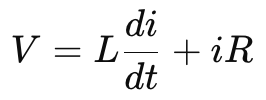
Ignoring inductance and ramp requirements may result in slow field sweeps or unstable control.
Reference overview:
https://ieeexplore.ieee.org/
Selecting a magnet without considering driver capabilities often leads to system limitations later.
4. Underestimating Thermal Load During Operation
Continuous magnetic operation generates heat in coil windings due to resistive losses.
If thermal load is not properly managed:
- Coil resistance increases
- Voltage requirements rise
- Field stability degrades
This is particularly relevant for long-duration automated experiments.
Thermal management strategies include:
- Air cooling
- Water-cooled conductors
- Proper duty cycle design
Procurement decisions should consider not only peak performance but also long-term operating conditions.
5. Neglecting Integration with Existing Laboratory Equipment
Magnet systems rarely operate in isolation.
They often need to integrate with:
- Cryogenic systems
- Lock-in amplifiers
- Source-measure units
- Automated experiment platforms
Communication interfaces such as USB, Ethernet, RS-232, or GPIB can determine how easily the system integrates into an existing setup.
Early consideration of system integration avoids expensive modifications later.
6. Forgetting About Stray Field Effects
Magnetic fields extend beyond the intended measurement region.
Stray fields can affect nearby instruments such as:
- Electron microscopes
- Precision balances
- Magnetic sensors
Proper magnet system design and laboratory layout planning help minimize unintended interference.
Ignoring stray field considerations during procurement may lead to unexpected experimental complications.
7. Lack of Calibration and Measurement Traceability
High-precision magnetic experiments often require calibration documentation.
Important considerations include:
- Field probe calibration certificates
- Power supply output accuracy
- Measurement uncertainty documentation
Calibration ensures that measured magnetic field values can be traced to recognized standards.
Reference overview:
https://en.wikipedia.org/wiki/Calibration
Without calibration traceability, experimental results may be difficult to compare across laboratories.
8. Not Thinking About Future Experiment Needs
Laboratories frequently expand their research scope over time.
A magnet system selected only for current requirements may later limit:
- Field sweep capabilities
- Sample size
- Measurement automation
Choosing a system with some flexibility—such as programmable power supplies or configurable magnet geometries—can extend the useful lifetime of the equipment.
9. The Value of System-Level Planning
Magnet systems work best when considered as part of a complete experimental platform.
Key components include:
- Magnet structure
- Excitation power supply
- Cooling method
- Measurement probes
- Control software
Cryomagtech supports laboratories by providing magnet systems and precision excitation power supplies designed for stable operation and integration into modern experimental environments.
👉 Product Link Placeholder – Precision Excitation Power Supplies for Laboratory Magnet Systems
Careful system planning reduces procurement mistakes and helps ensure that the magnet system meets real experimental needs.