
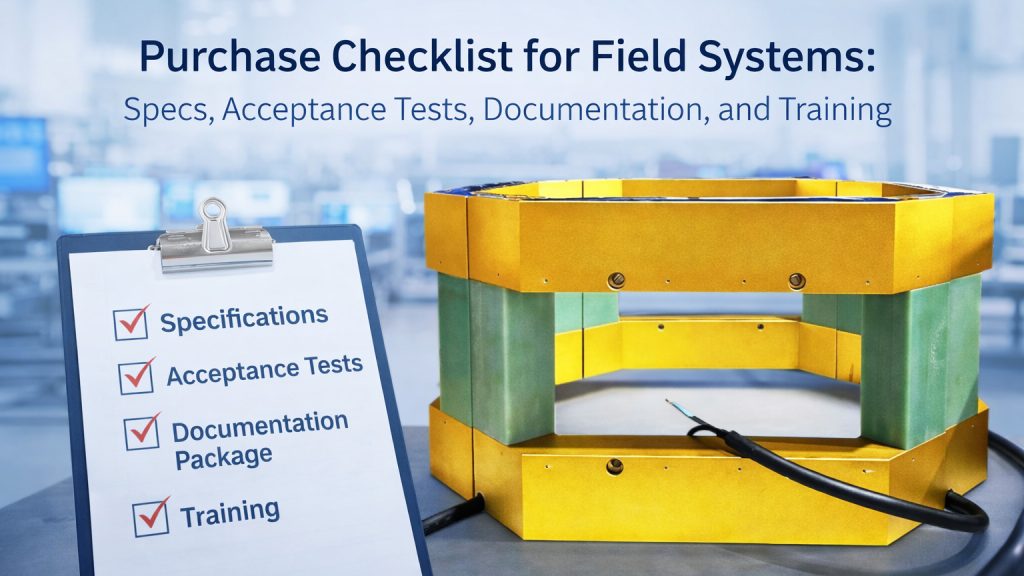
Purchasing a laboratory magnetic field system—whether an electromagnet or Helmholtz coil setup—is not just about selecting specifications.
A successful procurement ensures that the system:
- meets technical requirements
- can be verified during acceptance
- is supported by proper documentation
- can be operated reliably by users
This article provides a practical checklist covering specifications, acceptance testing, documentation, and training to help laboratories make better procurement decisions.
Why a Structured Checklist Matters
Magnet systems are complex engineering systems that integrate:
- magnetic circuits
- power supplies
- cooling systems
- measurement interfaces
Without a structured procurement process, risks include:
- incomplete specifications
- unclear acceptance criteria
- missing documentation
- user errors during operation
Standardized engineering practices emphasize the importance of clear specifications and validation procedures in complex systems.
https://en.wikipedia.org/wiki/Systems_engineering
1. Specification Checklist: Defining What You Actually Need
Before requesting a quotation, ensure that key parameters are clearly defined.
Core Magnetic Parameters
- target field strength (T or mT)
- uniform field region (size and tolerance)
- field direction and axis definition
Mechanical and Geometric Constraints
- pole gap or working space
- sample size and access requirements
- system footprint limitations
Electrical Requirements
- power supply type and control interface
- current and voltage requirements
- ramping and sweep behavior
Thermal and Cooling Requirements
- air-cooled vs water-cooled
- duty cycle (continuous or pulsed)
- allowable temperature rise
Environmental and Integration Requirements
- laboratory layout
- nearby sensitive equipment
- automation or software integration
A clear specification reduces ambiguity and improves design feasibility.
2. Acceptance Test Checklist: Verifying Performance
Even with a good specification, acceptance testing is essential.
Magnetic Field Verification
- field strength measurement
- uniformity verification
- repeatability testing
Electrical Performance
- current stability
- noise performance
- ramp accuracy
Thermal Performance
- temperature rise under load
- cooling system functionality
Safety and Interlocks
- cooling interlock operation
- emergency shutdown behavior
- fault detection systems
Acceptance tests ensure that the delivered system matches the specification.
3. Documentation Package Checklist
A complete documentation package is critical for long-term use.
Technical Documentation
- system drawings and schematics
- wiring diagrams
- cooling system layout
Calibration and Test Reports
- field calibration curves
- measurement uncertainty data
- factory test results
Calibration is essential for ensuring measurement traceability.
https://en.wikipedia.org/wiki/Calibration
Operation and Maintenance Manuals
- installation instructions
- operating procedures
- maintenance guidelines
Spare Parts and Service Information
- recommended spare parts list
- troubleshooting procedures
Proper documentation reduces downtime and improves system usability.
4. Training and Knowledge Transfer
Even well-designed systems require proper user training.
Operator Training
- system startup and shutdown
- safe operation procedures
- basic troubleshooting
Advanced Training
- measurement optimization
- calibration procedures
- system integration
Documentation-Based Training
- clear manuals
- quick-start guides
- labeled interfaces
Training ensures that users can operate the system correctly from day one.
5. Common Procurement Mistakes
Without a checklist, common issues include:
- incomplete specifications
- unclear acceptance criteria
- insufficient documentation
- lack of user training
These problems often lead to:
- delayed experiments
- incorrect results
- increased maintenance effort
6. Supplier Evaluation: Beyond Price
Selecting a supplier should involve evaluating:
- engineering capability
- documentation quality
- support and training
- system integration experience
Cryomagtech provides electromagnet and Helmholtz coil systems with a structured delivery approach covering specification support, acceptance testing, documentation, and training.
👉 Product Link Placeholder – Electromagnet and Helmholtz Coil Systems with Full Delivery Support
A structured supplier approach ensures that the system is not only delivered—but usable and maintainable.
Key Takeaways
- Magnet system procurement requires more than defining field strength
- A complete specification reduces design uncertainty
- Acceptance testing verifies system performance
- Documentation ensures long-term usability
- Training enables reliable operation
A structured checklist transforms procurement from a purchase into a controlled engineering process.