
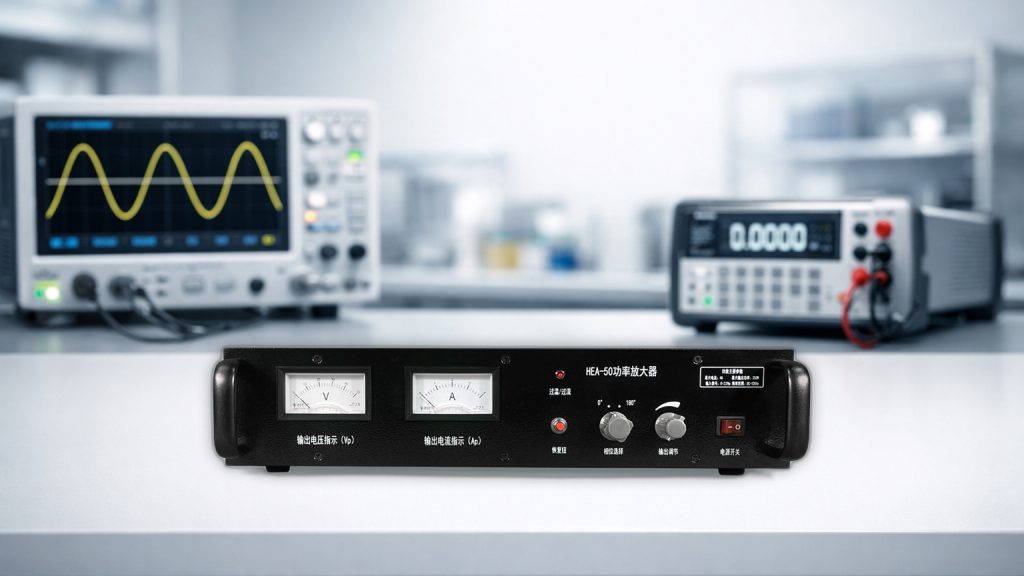
In magnetic and electrical measurement systems, one common mistake appears repeatedly:
Users invest in high-resolution measurement instruments — but overlook excitation source resolution.
The result:
- Underutilized measurement capability
- Artificial noise floor
- Poor reproducibility
This article explains the difference between power supply resolution and measurement resolution — and why matching them correctly is essential for precision experiments.
1. What Is Power Supply Resolution?
Power supply resolution refers to the smallest programmable current or voltage step the source can output.
For current-controlled magnetic systems:
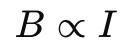
If your excitation power supply has:
- 1 mA resolution
- 10 A full-scale
Then your digital resolution is:
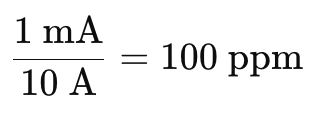
That directly defines the smallest magnetic field increment achievable.
Digital-to-analog conversion (DAC) resolution fundamentals are explained under Wikipedia:
https://en.wikipedia.org/wiki/Digital-to-analog_converter
Resolution is determined by DAC bit depth and control architecture.
2. What Is Measurement Resolution?
Measurement resolution is the smallest detectable change in measured signal.
Examples:
- 1 µV voltage resolution
- 10 nV lock-in sensitivity
- 0.1 µT Hall probe resolution
Measurement resolution is limited by:
- Instrument noise
- ADC resolution
- Bandwidth
- Environmental interference
It is not defined by the power supply — but it can be constrained by it.
3. The Mismatch Problem
Consider this scenario:
- Hall measurement system resolution: 0.1 µT
- Magnet constant: 1 mT/A
- Required field resolution: 0.1 µT
Required current resolution:
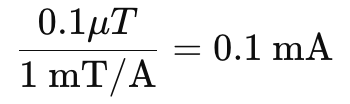
If your power supply only supports 1 mA resolution:
Your magnetic field step size is 10× larger than your measurement resolution.
The measurement system becomes overspecified.
4. Resolution vs. Stability vs. Noise
Resolution alone does not guarantee performance.
Three separate parameters matter:
- Resolution (digital step size)
- Stability (long-term drift)
- Noise (short-term fluctuation)
High-resolution DAC with poor analog filtering still produces noisy output.
Precision power electronics design, widely discussed in IEEE instrumentation literature, emphasizes low-noise current regulation as critical for measurement accuracy.
https://ieeexplore.ieee.org/
True precision excitation requires:
- High bit-depth DAC
- Low ripple
- Low drift
- Thermal stability
5. When Resolution Limits Experimental Capability
Resolution mismatch becomes critical in:
- Weak magnetic signal detection
- Spintronics experiments
- Magnetoresistance measurements
- Sensor calibration
- Low-field AC sweeps
If the current step size exceeds the physical signal scale, experimental resolution is artificially quantized.
Researchers may incorrectly interpret data nonlinearity — when it is actually excitation quantization.
6. Matching Excitation to Measurement
A practical rule:
Excitation resolution should be at least 5–10× finer than required measurement resolution.
Example:
If required magnetic resolution = 0.1 µT
Design for current resolution equivalent to 0.01–0.02 µT.
This ensures:
- Smooth sweep profiles
- Accurate curve fitting
- Reduced quantization artifacts
👉 Product Link Placeholder – Cryomagtech High Precision Excitation Power Supply
Our high precision excitation systems are designed to match advanced measurement platforms, providing:
- Fine current programming resolution
- Low noise output
- Long-term stability
Precision is meaningful only when source and measurement are aligned.
7. Superconducting Systems: Even More Demanding
In superconducting magnet applications:
- Current stability defines field stability
- Resolution impacts ramp control
- Persistent mode transitions require precise current control
Quantization error at low ramp rates can introduce unwanted field oscillations.
👉 Product Link Placeholder – Cryomagtech Superconducting Magnet Power Supply
Ultra-stable current control is essential for maintaining experimental integrity.
8. Common Procurement Mistake
Many laboratories specify:
- Maximum current
- Maximum voltage
- Protection features
But omit:
- Current resolution
- Programming granularity
- Noise spectral density
- Long-term drift specification
This leads to system mismatch.
Precision measurement begins at the excitation source.
Key Takeaways
- Power supply resolution defines minimum field step
- Measurement resolution defines minimum detectable signal
- Mismatch wastes instrument capability
- Resolution ≠ stability ≠ noise
- Excitation resolution should exceed measurement requirement
If your measurement system is high precision, your excitation system must be equally precise.
References
- Wikipedia – Digital-to-Analog Converter
https://en.wikipedia.org/wiki/Digital-to-analog_converter - IEEE – Precision power electronics and noise control
https://ieeexplore.ieee.org/