

Magnetic field simulations look precise.
Color maps are smooth.
Uniformity appears perfect.
Field lines align beautifully.
Then the real system is assembled — and the measured field does not match the model.
This gap between simulation and reality is common in magnetic field systems, especially in electromagnets and vector coils.
This article explains why magnetic field models fail — and why validation and measurement matter just as much as simulation.
1. Simulation Is Not Reality — It Is a Model
Most magnetic simulations (COMSOL, ANSYS Maxwell, etc.) solve Maxwell’s equations under idealized assumptions.
Magnetic field theory itself is well documented in Wikipedia under Maxwell’s equations:
https://en.wikipedia.org/wiki/Maxwell%27s_equations
But simulation requires assumptions about:
- Boundary conditions
- Material properties
- Geometric symmetry
- Mesh resolution
If any assumption deviates from real-world conditions, the results shift.
The solver is not wrong.
The model is incomplete.
2. Boundary Conditions: The First Source of Error
In finite element analysis (FEA), you must define boundaries:
- Infinite domain approximations
- Symmetry planes
- Magnetic insulation conditions
In real laboratories:
- Steel tables distort flux
- Nearby equipment alters field lines
- Earth’s magnetic field adds background bias
If the model assumes an isolated environment but the experiment is not isolated, simulation accuracy collapses.
Many engineers forget that magnetic fields are non-local — they extend beyond your mesh.
3. Material Properties: The B-H Curve Trap
Magnetic simulations depend heavily on accurate B-H curves.
Common issues:
- Using idealized linear material models
- Ignoring hysteresis
- Assuming constant permeability
- Neglecting temperature dependence
In practice:
- Soft iron saturates
- Magnetic cores heat up
- Permeability drifts with temperature
According to electromagnetic material studies frequently discussed in IEEE research literature, nonlinear magnetic material behavior is one of the primary causes of field deviation between simulation and experiment.
https://ieeexplore.ieee.org/
If your model assumes μ is constant, but your core is near saturation, your field distribution will shift dramatically.
4. Geometry vs Assembly Reality
CAD geometry is perfect.
Machined parts are not.
Real-world deviations include:
- ±0.1–0.5 mm machining tolerances
- Coil winding asymmetry
- Mechanical misalignment
- Thermal expansion during operation
In vector systems, even small assembly errors cause:
- Cross-axis coupling
- Field tilt
- Uniformity degradation
Simulation assumes perfect symmetry.
Reality rarely delivers it.
5. Current Stability: The Forgotten Variable
Simulations usually assume:
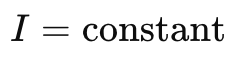
In actual systems:
- Power supply ripple exists
- Thermal drift changes resistance
- Long-term stability varies
Because:

Any current instability directly converts into magnetic field error.
High precision excitation power supplies reduce the mismatch between modeled current and actual delivered current.
👉 Product Link Placeholder – Cryomagtech High Precision Excitation Power Supply
For superconducting magnet systems, ultra-low drift current control becomes even more critical:
👉 Product Link Placeholder – Cryomagtech Superconducting Magnet Power Supply
Simulation without stable current control is theoretical accuracy only.
6. Meshing and Numerical Approximation Limits
Mesh density strongly affects:
- Field gradients
- Uniformity prediction
- Edge effects
Coarse mesh leads to:
- Artificial smoothing
- Overestimated uniform regions
Over-refined mesh leads to:
- Excessive computation
- False confidence in precision
Numerical convergence does not guarantee physical correctness.
7. Environmental Magnetic Influence
Most simulations ignore:
- Earth’s magnetic field (~50 µT)
- AC power line magnetic fields
- Steel building structures
Low-field applications (mT or µT level) are highly sensitive to these factors.
Without background measurement and compensation, simulation validation becomes unreliable.
8. The Missing Step: Measurement and Acceptance Testing
Simulation predicts.
Measurement verifies.
Professional magnetic system delivery includes:
- 3D field mapping
- Uniformity measurement
- Thermal drift characterization
- Current stability verification
- Environmental baseline measurement
Acceptance criteria should define:
- Field strength tolerance
- Uniform region size
- Directional accuracy
- Stability over time
Without measured validation data, a magnetic system is unfinished.
9. Why Simulation Still Matters — But Is Not Enough
Simulation is essential for:
- Design optimization
- Parameter trade-off
- Preliminary feasibility
But it cannot replace:
- Real-world field mapping
- Controlled calibration
- Stable excitation systems
- Final validation under operating conditions
The most reliable magnetic systems are built with both simulation and measurement discipline.
Key Takeaways
- Magnetic simulations rely on ideal assumptions
- Boundary conditions strongly influence results
- Nonlinear material behavior breaks linear models
- Assembly tolerances degrade symmetry
- Current stability directly affects field accuracy
- Field mapping and acceptance testing are essential
Simulation predicts performance.
Measurement guarantees it.
References
- Wikipedia – Maxwell’s Equations
https://en.wikipedia.org/wiki/Maxwell%27s_equations - IEEE – Research on nonlinear magnetic materials and modeling
https://ieeexplore.ieee.org/