
Introduction
From automotive safety to quantum metrology, Hall effect sensors and measurement platforms are moving fast in 2025. Three forces drive the change: new materials (graphene, 2D semiconductors), high-stability cryogenic systems, and metrology breakthroughs linked to topological phases. This update highlights the most relevant advances for labs choosing or upgrading their Hall equipment.
1) Materials & Devices: Higher sensitivity, higher temperature
Recent device papers show graphene Hall bars achieving strong magnetic sensitivity even at elevated temperatures, which is promising for harsh-environment sensing around power electronics and EVs. One 2025 study reports ultrahigh response at 150 °C with a CVD-graphene Hall device integrated in a FET structure, pointing to robust, CMOS-friendly paths for next-gen sensors. ACS Publications
Beyond classical charge Hall sensors, related spin-charge conversion research continues to push spin Hall ratios in 2D semiconductors, improving the efficiency of spin–orbit platforms that often share readout chains and low-noise front ends with Hall metrology. Nature
2) Precision Metrology: QAHE and cryogen-free stability
On the measurement side, quantum anomalous Hall (QAHE) physics is being actively explored for resistance standards and precision metrology. Recent work argues QAHE devices can underpin next-generation quantum standards, complementing quantum Hall systems that historically required high magnetic fields. AIP Publishing
At the same time, labs report parts-per-billion-level electrical accuracy using pulse-tube cryocoolers paired with cryomagnetic systems and custom coaxial cryoprobes. Translation: you can now achieve elite precision without liquid helium, if the platform suppresses vibration and thermal noise correctly. arXiv
3) Topological & “zero-field” frontiers that shape tomorrow’s tools
Breakthroughs in fractional quantum anomalous Hall behavior at or near zero applied field, and fractional quantum spin Hall transport in moiré systems, keep expanding the material playground. While these are basic-science results, they influence instrument roadmaps: lower-field but ultra-stable magnets, cleaner low-noise amplifiers, and better thermal anchoring for fragile 2D stacks. Nature+1
A 2025 editorial overviewing the family of Hall effects underscores why Hall physics remains a central probe across condensed-matter topics, from anomalous and spin Hall to metrology-relevant regimes. Nature
4) System-level trends labs should watch
- High-temp operability: sensors and interposers rated for 150 °C+ for in-situ power-electronics monitoring. ACS Publications
- Cryogen-free precision: PPB-class stability using pulse-tube cryocoolers with proper vibro-isolation and coax routing. arXiv
- Topology-aware workflows: low-field stability and reversible-field routines to support QAHE/QSH studies. AIP Publishing+1
- Data integrity: more differential/reversed-field sequences and scripted automation to suppress offsets and drift (best practice aligning with modern metrology papers). AIP Publishing
What this means for buyers
If you’re evaluating a Hall platform in 2025, prioritize:
- Temperature envelope & stability (room-temp to cryogenic, ±0.1 K class),
- Magnet architecture (cryogen-free options with low vibration; persistent-mode where relevant),
- Low-noise electronics (µV-level resolution; reversed-field automation), and
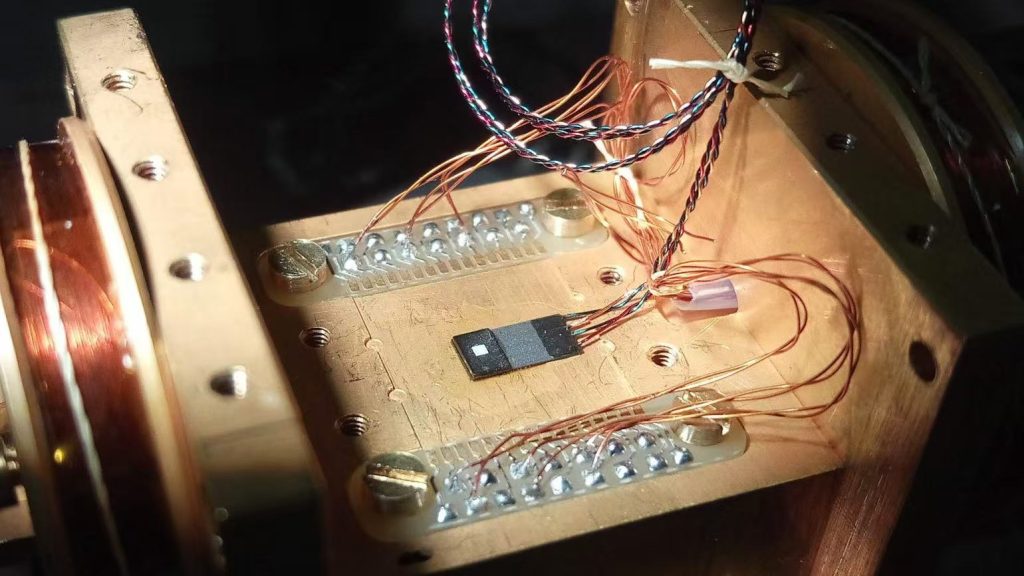
- Sample ecosystems (Hall bar and Van der Pauw fixtures, 2D-material-friendly probe heads).
👉 Cryomagtech Hall Effect Measurement System
Conclusion
Hall technology in 2025 is defined by better materials, helium-free precision, and metrology inspired by topology. Labs that align purchases with these trends will get longer platform lifetimes and cleaner data. Cryomagtech supports this shift with low-noise, cryogenic-ready Hall systems and flexible sample fixtures for semiconductors, 2D materials and quantum devices.